
Most music video launches follow a predictable pattern:
Upload to YouTube.
Share on social.
Drop a streaming link.
Move on.
The problem is that this approach treats content as a one-time announcement rather than long-term digital infrastructure.
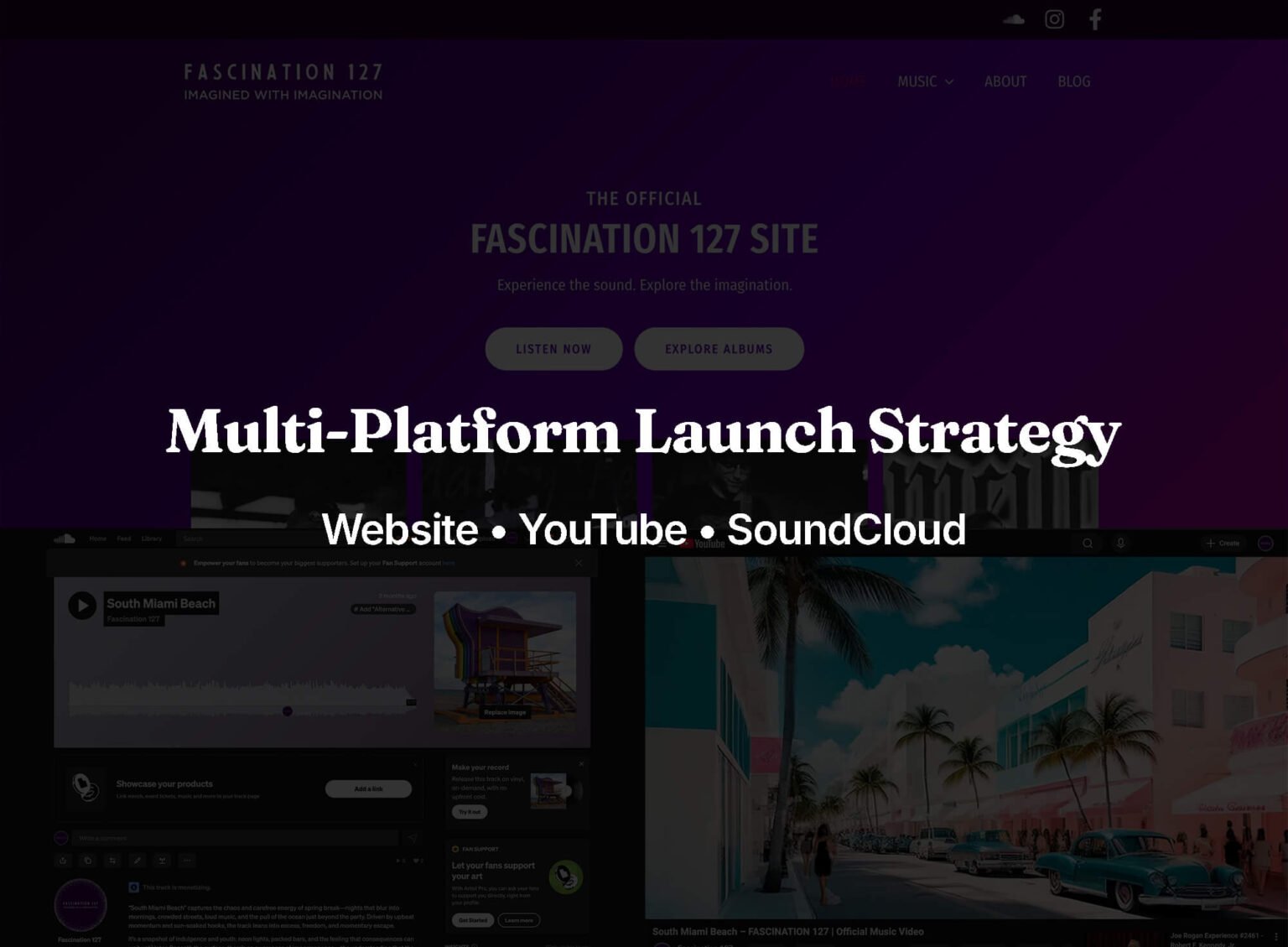
In this case study, I’ll walk through how I structured a recent music video launch across website, YouTube, and SoundCloud — not just for exposure, but for search visibility, authority building, and long-term discoverability.
While this project was for a creative release, the same framework applies to businesses launching new services, products, properties, or campaigns.
Project Overview
- Artist: FASCINATION 127
- Release: “South 1st Street” – Official Music Video
- Platforms Used: YouTube, SoundCloud, Official Website
The official release was structured around a dedicated launch page on the band’s website, supported by the YouTube video premiere and the SoundCloud streaming release.
Rather than treating these as isolated platforms, the goal was to build a connected ecosystem where each channel reinforces the others.
1. The Website as the Primary Authority Hub
The first step was ensuring the website served as the central authority source.
Instead of relying solely on YouTube or SoundCloud pages, a dedicated, optimized blog post was created on the official site. You can see how the structured release page anchors the entire launch.
Key Elements Included:
- Clean, descriptive permalink structure
- Optimized page title including “Official Music Video”
- Structured H1 and H2 hierarchy
- Embedded YouTube video
- Embedded SoundCloud track
- Internal links to related releases
- Clear contextual description of the track and video
Owning the primary URL ensures long-term control of search positioning and content structure — something social platforms don’t guarantee.
2. Multi-Platform Distribution Strategy
YouTube
The YouTube release acts as the primary discovery engine, optimized with consistent naming, descriptive metadata, and a clear link back to the website.
- Primary video discovery engine
- Optimized title and description
- Links back to the website
- Consistent naming conventions
SoundCloud
The SoundCloud track page reinforces the streaming ecosystem while providing an additional authority signal back to the primary website.
- Streaming ecosystem presence
- Additional backlink signal
- Reinforced keyword consistency
Website
- Long-form context
- Internal linking control
- Brand authority consolidation
Rather than duplicating content across platforms, each channel supports the others through strategic linking.
3. SEO Structure and Signal Consistency
- Consistent naming across platforms (“South 1st Street – Official Music Video”)
- Descriptive file naming for thumbnails and images
- Keyword alignment between website and YouTube description
- Internal linking to previous releases
- Clean metadata structure
- Cross-domain linking without duplication
Publishing content is not enough — it must be architected.
4. Cross-Linking Architecture
- Website → YouTube
- Website → SoundCloud
- YouTube → Website
- SoundCloud → Website
This reinforces authority signals and directs traffic back to the owned platform.
5. Why This Matters Beyond Music
Although this example involves a music video, the framework applies directly to business launches.
- Real estate developments
- Corporate service rollouts
- Professional speaking engagements
- Product launches
- Brand announcements
Conclusion: Treat Content Like Infrastructure
Digital releases should be treated as long-term assets — not short-term announcements.
By structuring content across platforms with clear authority, internal linking, and consistent naming, a launch becomes a durable search asset.
If there’s a consistent theme across my work, it’s this: content should be structured with long-term visibility in mind — not just short-term attention.